
Our story
Twelve years, one line of work
Every step came out of a problem somebody had to solve — our own or a customer's. Two divisions grew big enough to stand on their own feet and were spun off.
The Micro Raman spectrometer gains the high-pressure Raman cell: a tritium compatible measuring chamber with an integrated fused-silica window, available for 100, 400 and 1000 bar and verified beyond 1500 bar burst pressure — a world first at this pressure. The high vacuum range is rounded off with the 1.5 inch size, and the container laboratory becomes configurable down to the component.
The product line of high vacuum tritium compatible products is further extended with ¼ inch to 1.5 inch products. Analytics on protium, deuterium and tritium for the fusion industry is extended with a dedicated Raman spectrometer.
Machine building and lab building projects for major clients in the nuclear field were brought on the way. In parallel, the development of an industrial 3D printer for a dental project was established and, in late 2024, spun off into its own entity (adartys.com). Semiconductor chip filling for customers in the nuclear battery sector is established.
Tritium compatible high vacuum valves are developed and tested, and a new, automated laser machine for our own production of gaseous tritium light sources is built. A new all-magnetically driven syringe type pump is developed. The product range is extended with the glow sensor, an analytic solid state scintillation device for the measurement of tritium concentration.
Automation projects on tritium handling and high vacuum technology. The GTLS product range is extended by the PLP, an insert that allows perfect daylight and night visibility. Up-cycling of GTLS production leftovers is introduced, so recycled tritium can be re-entered directly into the production cycle. The medical department is spun off under the name Yalosys to give it the focus it needs; Yalosys has since grown into a world-renowned solution provider for complex laser glass processes, laser welding and nano-hole drilling.
Tritium handling and filling rig construction for customers in Asia.
Engineering and building of manufacturing machines, establishing the processes for GTLS production. Invention and upgrade of the high pressure GTLS loading system. A dedicated med-tech division in glass-to-glass laser welding is established, and internationally funded projects start on that topic.
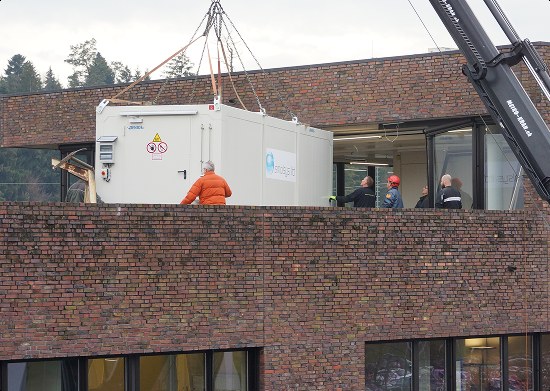
After relocating the company to Lucerne, a very safe way to set up such a production for tritium was found: a modular «Plug & Produce» pop-up production cell — a laboratory in a container. Since it proved optimal for tritium and high-compliance work, it became the smolsys trademark and is in use by customers working with tritium today. A dedicated medical department was established for glass-to-glass short-pulse laser fusion experiments.
The company is founded in Zürich by specialists in the tritium business, to pursue the dream of providing the world with new tritium products and technology — above all tritium powered glass implants and IoT sensors. In the first month, planning and engineering of the machines and processes started.
 Daniel Jakob
 Patrick Burkhalter
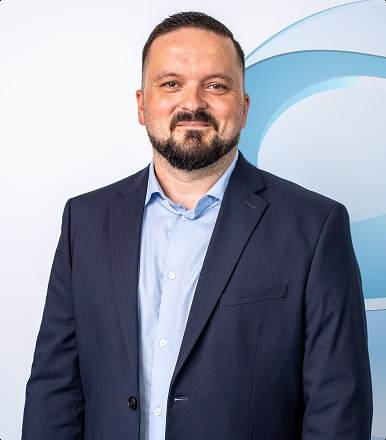 Leonard Biblekaj
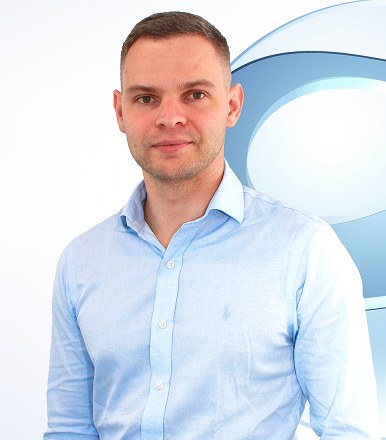 Erik Varhegyi
 smolsys ltd.
Platz 4
smolsys ltd.
Platz 4