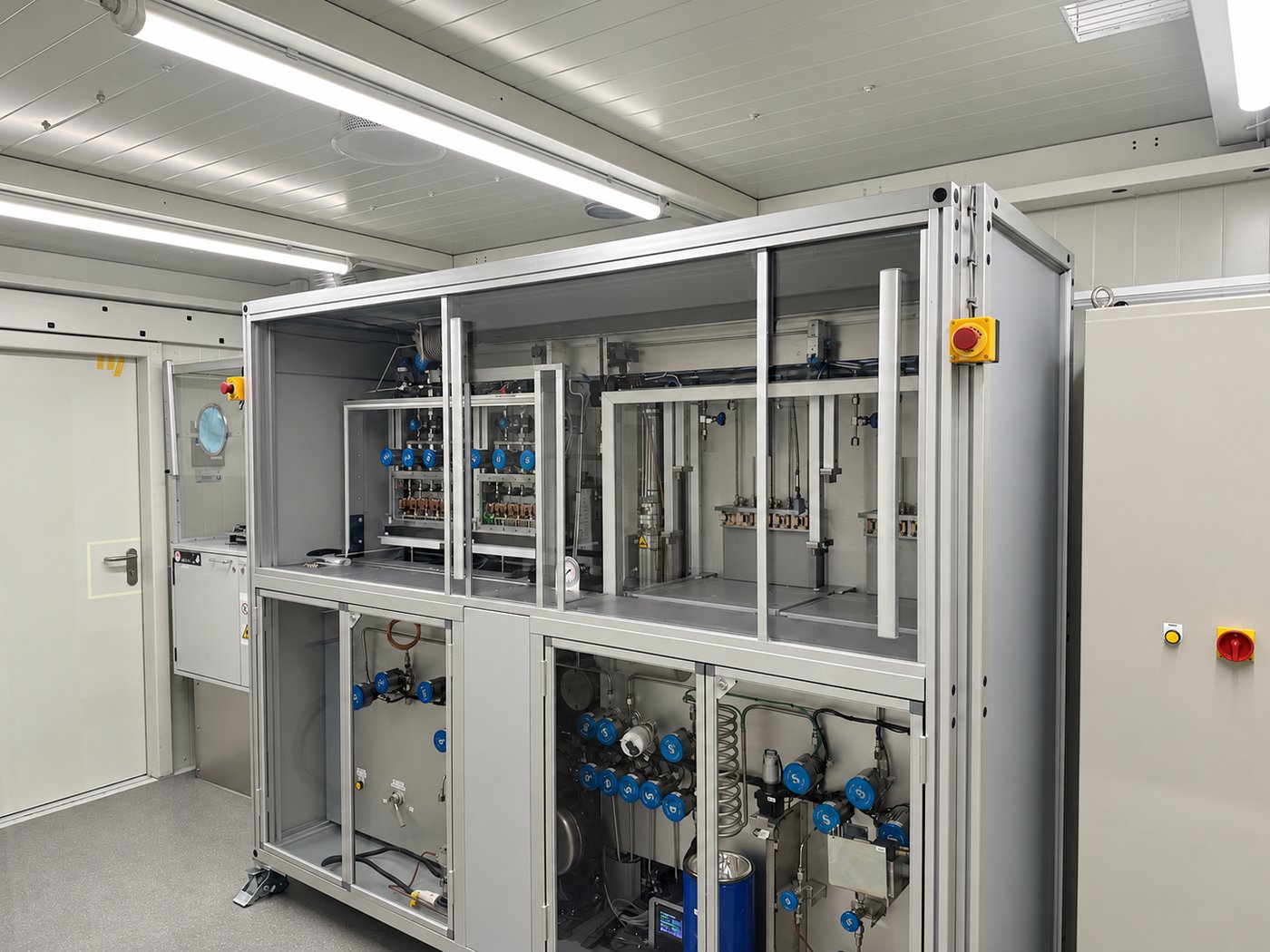
Automated machines
Gas panels, process skids and test rigs: built, wired, programmed and tested as one unit before they ship.
Custom machine building →
Frontier engineering
We build research and production equipment for nuclear fusion and energy research to your specification — from single parts through automated machines to complete, mobile laboratories. Requirement analysis, engineering, manufacturing and programming come from one house, and what we deliver is turnkey.
Scope
Whether it is a bracket, a gas handling machine or a laboratory on wheels — the engineering question is the same: what has to happen, how is it kept safe, and how will someone operate it at three in the morning.
Gas panels, process skids and test rigs: built, wired, programmed and tested as one unit before they ship.
Custom machine building →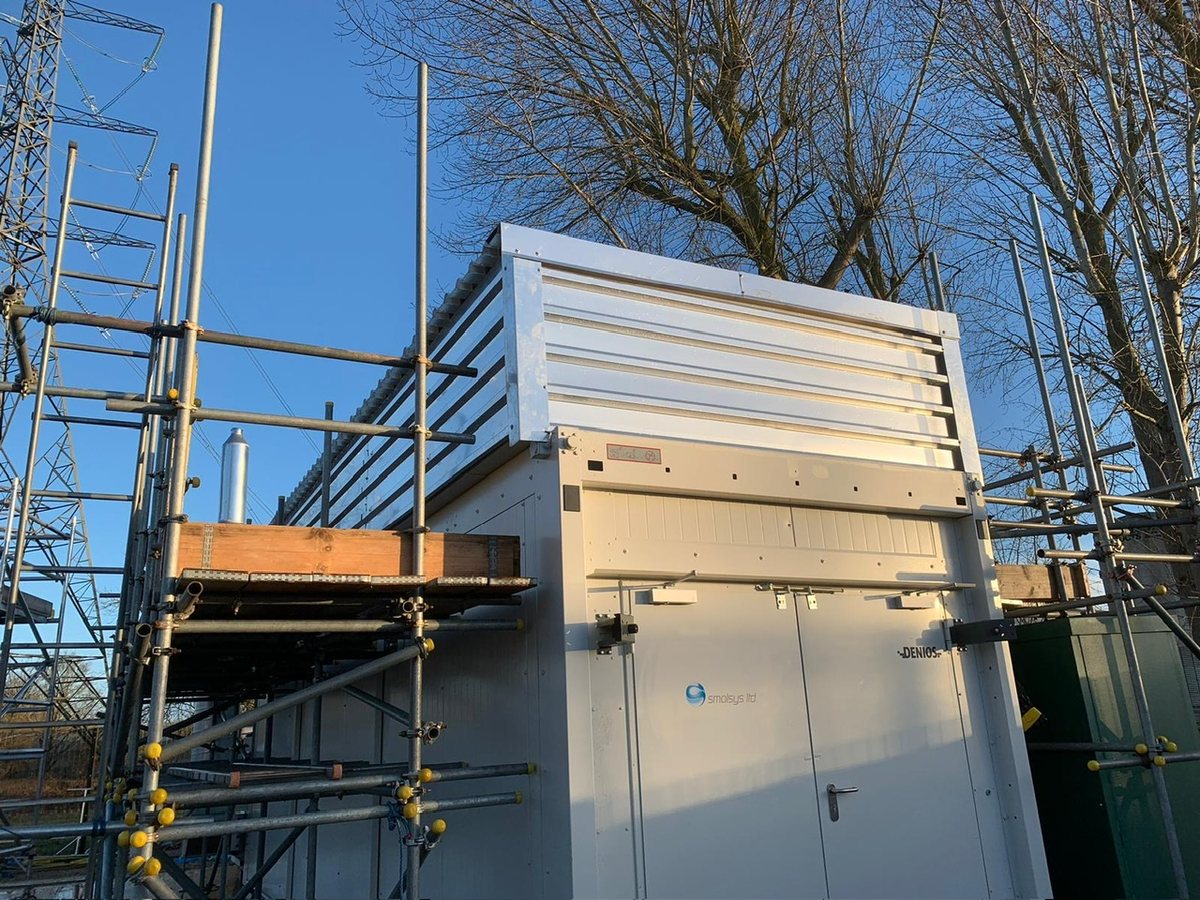
A complete radio-isotope laboratory in a transportable shell — ventilation, monitoring, safety and process in one certified unit.
Container laboratories →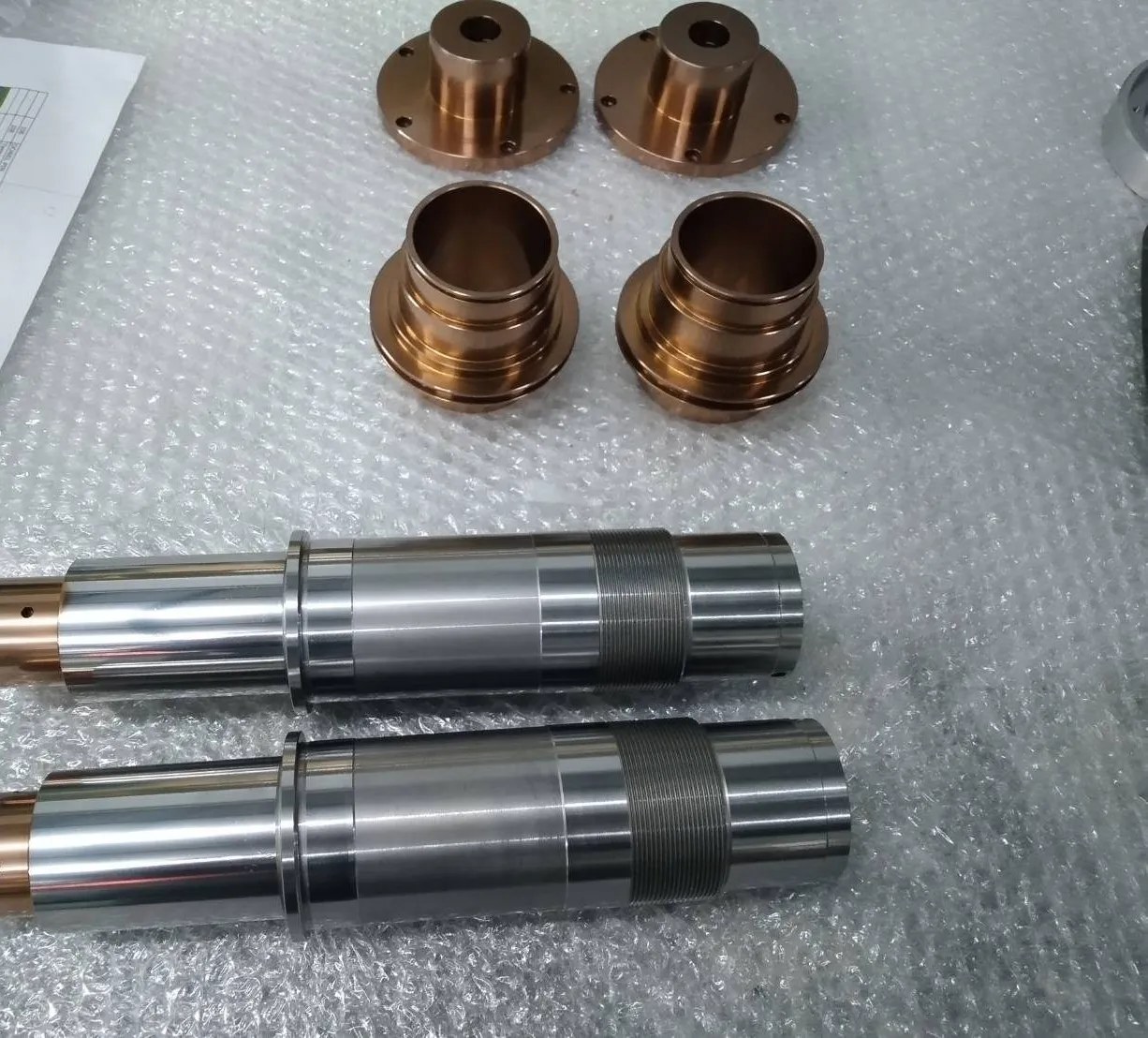
Machined and additively manufactured components from our own production, measured before they leave the shop.
Parts manufacturing →Automation
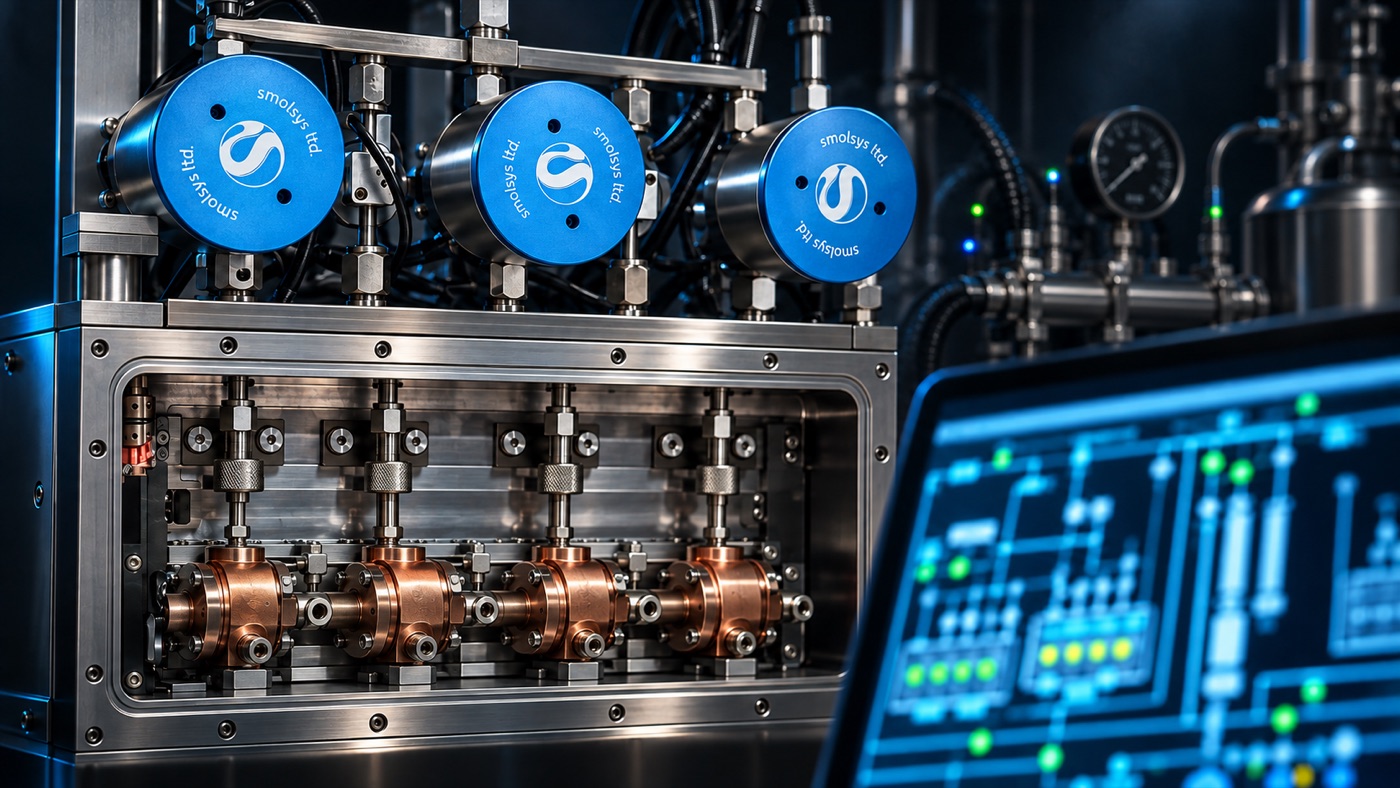
A gas path without control is a set of pipes. We write the PLC program, build the operator interface from your P&ID and wire the interlocks that keep the process inside its limits — including the states nobody likes to think about: power loss, pressure drop, a sensor that stops answering.
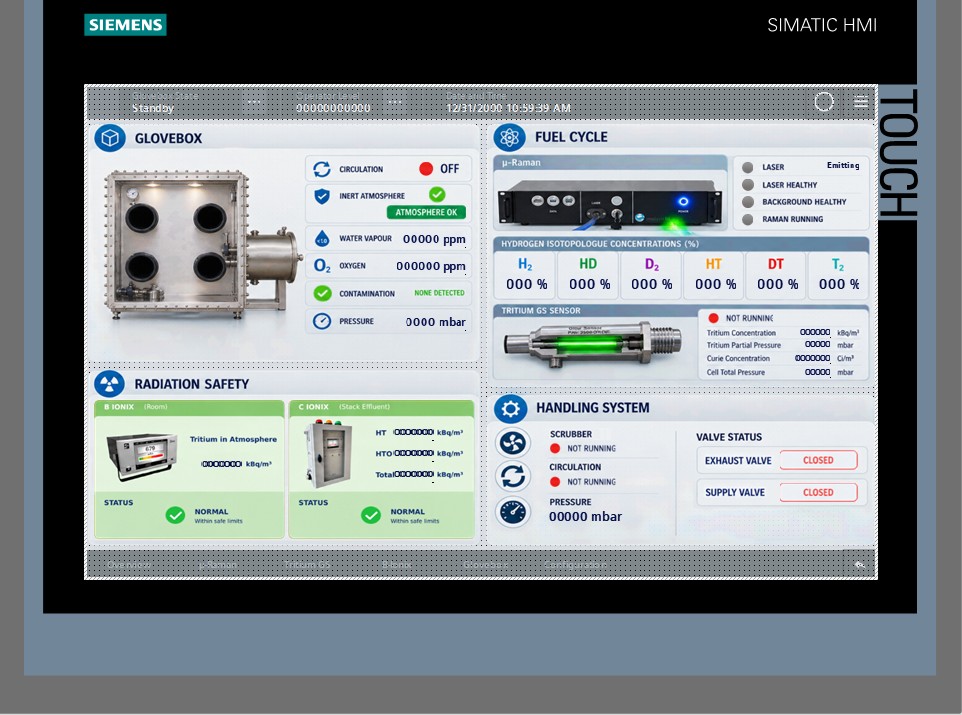
In operation
Status of every monitored channel, activity and flow as live values, and the history behind them. The same data feeds the alarm logic, so what the operator reads is what the machine acts on — no second truth in a separate system.
Method
Five steps, each one closed before the next one starts. You know at every point what is decided and what is still open — and what it costs to change it.
Process, quantities, pressures and temperatures. The safety case, the regulations that apply, the site and its interfaces. We write down what the machine has to do before we draw anything.
P&ID, layout and mechanical design, with the risk assessment running alongside — ATEX where the gas demands it, functional safety where the process does.
Machined and additive parts from our own production, gas path assembly, electrical cabinet build. Welds and leak tests documented as they happen.
PLC, interlocks and HMI, written against the P&ID you approved. Simulated first, then run on the real machine against the real sensors.
Factory acceptance test, installation, start-up on your site, documentation and training. One contact from the first sketch to the last signature.
Engineering solutions
Disciplines we cover in house. Where something lies outside them, we say so and bring in a partner we have worked with for years.
Built and running
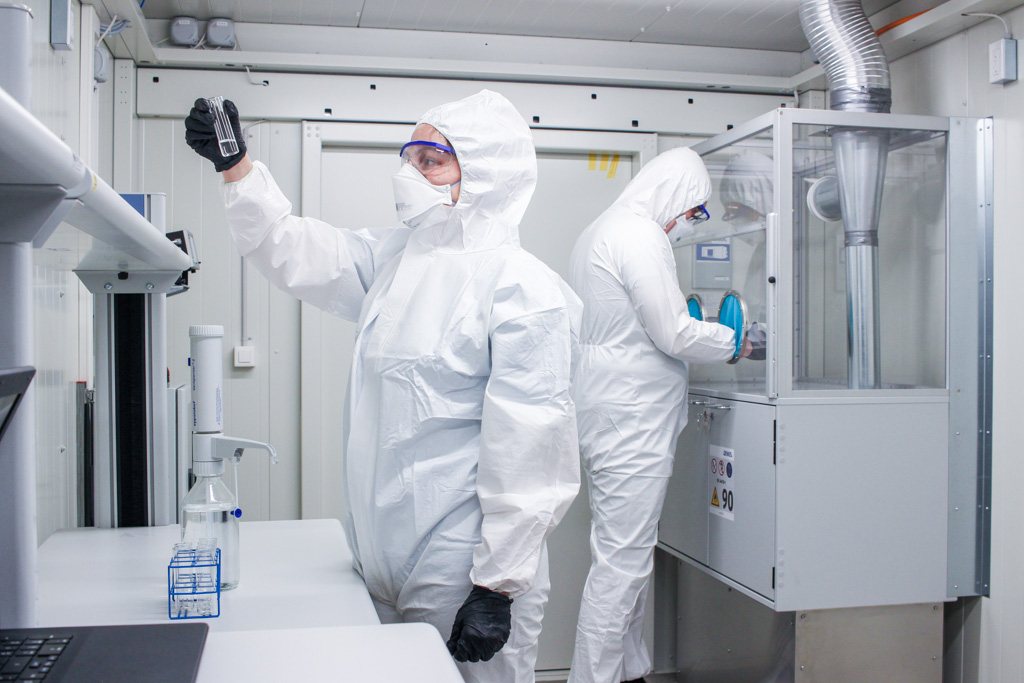
Process, ventilation, monitoring and safety in one certified shell, commissioned before it leaves us.
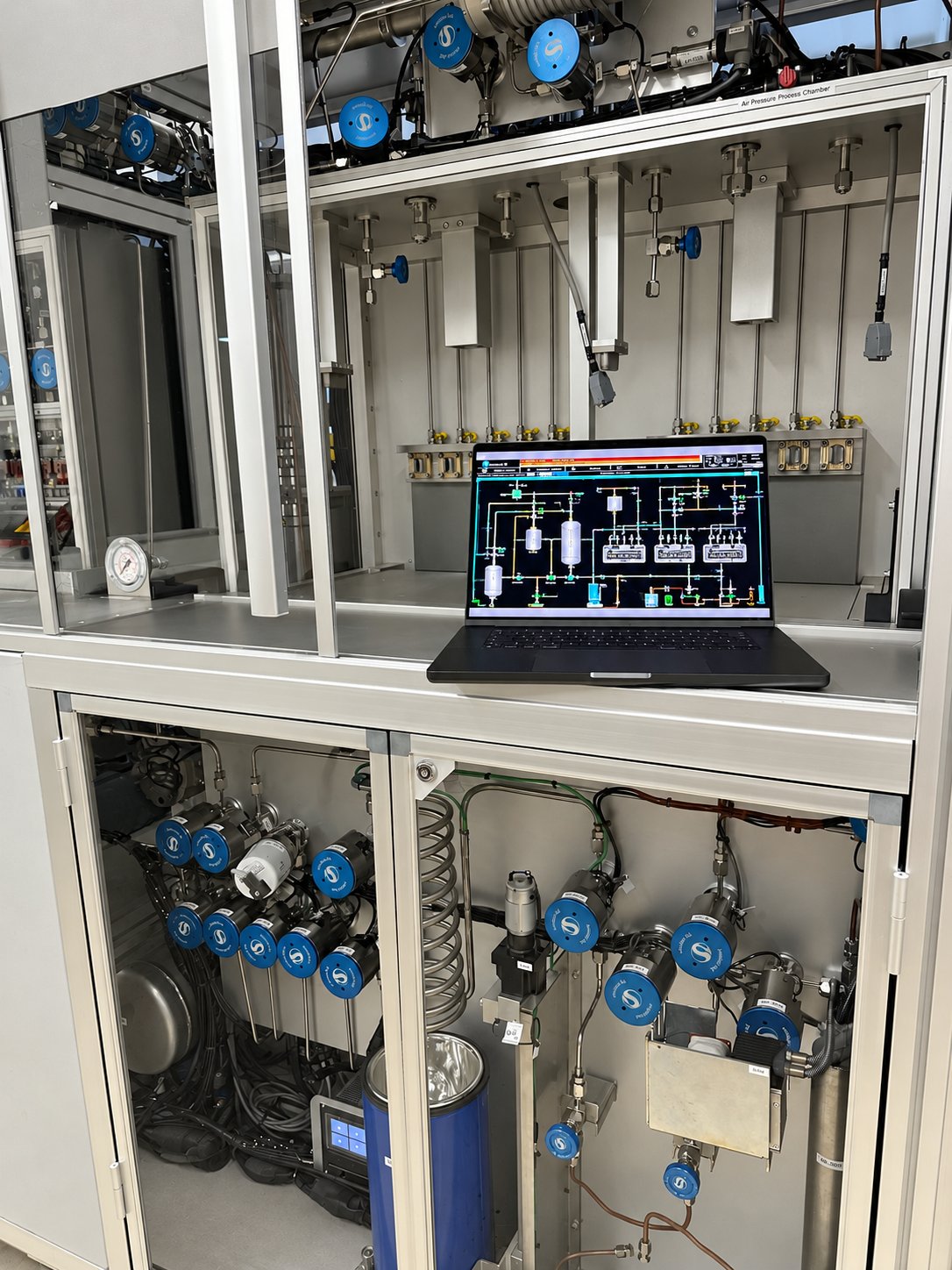
The operator interface is part of the machine, drawn from the same P&ID the gas path was built to.
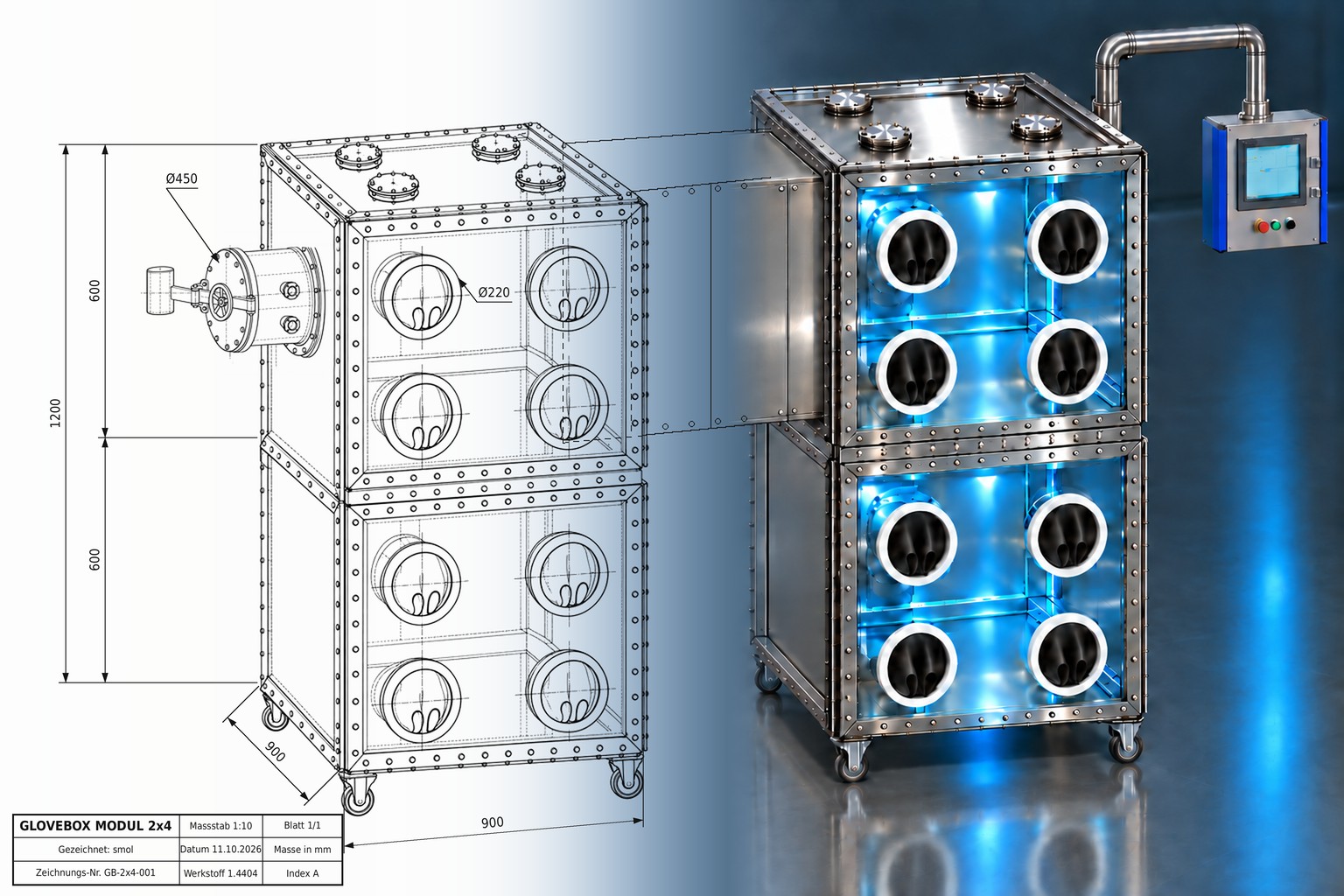
Standard cube, adapted to the process — with the machinery, sensors and automation your work needs inside.
For more information
Tell us the process, the constraints and the date it has to run. We come back with questions first and a concept second — that order saves everybody money.
 smolsys ltd.
Platz 4
smolsys ltd.
Platz 4